Sale

Skip to product information

Sale

Add to Cart
More Information
What you'll make?

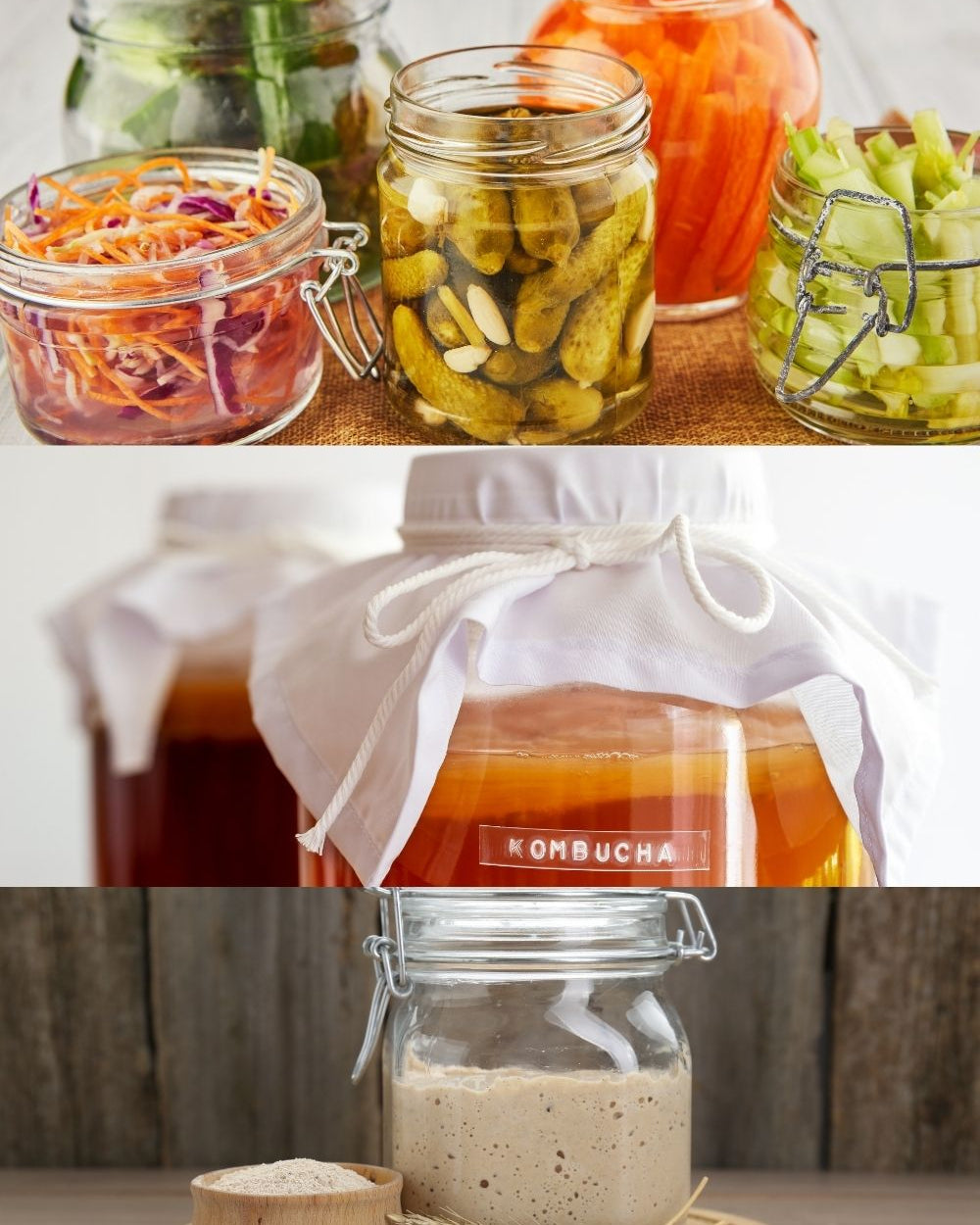
The Fumami Courses Bundle gives you three different ways to explore fermentation at home.

🥬 Lacto-Fermented Vegetables

From the Lacto-Fermentation course, you'll learn to make:

Sauerkraut
Fermented dill pickles
Giardiniera
Other fermented vegetables using the techniques you learn in the course

You'll understand how salt, microbes, time and an anaerobic environment work together to transform vegetables.

🫧 Fermented Drinks

From The Fizz Lab, you'll learn to make:

Ginger bug
Ginger soda
Water kefir
Kombucha
Rejuvelac
Wild soda

You'll learn how fermentation creates flavour and, in suitable conditions, natural carbonation.

🍞 Sourdough

From Sourdough Bread & Beyond, you'll learn:

How to make and maintain a sourdough starter
How to prepare sourdough dough
How fermentation affects your dough
How to shape and proof
How to bake sourdough at home
How to troubleshoot common sourdough problems

Three courses. Three applications. One foundation in fermentation.

Why this course?

Fermentation doesn't stop at one jar or one recipe. Vegetables, drinks and sourdough all use different fermentation processes—and learning how they work gives you a much broader understanding of fermentation at home.

The Fumami Fermentation Courses Bundle brings together three beginner-friendly courses covering lacto-fermented vegetables, fermented drinks and sourdough baking.

Instead of learning one technique at a time, you'll build a foundation across different types of fermentation and learn how to confidently experiment in your own kitchen.

How does it work?

What Can You Learn to Ferment at Home?

Fermentation covers much more than one type of food. With the Fumami Courses Bundle, you'll learn three different fermentation processes and how they work in a home kitchen.

Fermented vegetables

Learn the fundamentals of vegetable fermentation, including salt, fermentation conditions and troubleshooting. Make sauerkraut, fermented pickles and giardiniera.

Kombucha & fermented drinks

Learn how to make kombucha, work with a SCOBY and explore water kefir, ginger bug, fermented soda and other fermented drinks.

Sourdough bread

Learn how to create a sourdough starter, understand dough fermentation and bake sourdough bread at home.

Together, the three courses give you a practical foundation for learning fermentation at home rather than learning isolated recipes.

Who is this course for?

The Courses Bundle is for you if:

You want to explore fermentation beyond just one recipe.
You want to learn both fermented foods and drinks.
You want to learn sourdough alongside other fermentation techniques.
You're completely new to fermentation and want a structured starting point.
You've experimented with fermentation but want to understand the fundamentals.
You want to build practical fermentation skills you can use in your everyday kitchen.
You don't want to buy separate courses as you discover new areas of fermentation.

It's particularly useful if you're not sure which type of fermentation you'll enjoy most.

Course at a glance

Level - Beginner

Format - Online, self-paced

Includes - 3 complete Fumami courses

You'll learn - Vegetable fermentation, fermented drinks & sourdough baking

You'll make - Sauerkraut, fermented pickles, kombucha, water kefir, ginger bug drinks, sourdough & more

Equipment - Everyday kitchen & basic home-baking equipment

Experience - No previous fermentation experience required

You don't need:

You don't need:

Previous fermentation experience
A professional kitchen
Expensive fermentation equipment
A Dutch oven
Special brewing equipment
Advanced baking skills
A science background

The courses are designed around practical home fermentation and baking.

What you'll need?

You don't need to buy everything upfront.

Across the three courses, you'll work with everyday kitchen equipment and ingredients such as:

For Lacto-Fermentation
Glass jars
Salt
Fresh vegetables
Basic kitchen utensils
Weighing equipment
For Fermented Drinks
Glass jars and bottles
Sugar
Fresh ginger
Tea
Water kefir grains
Kombucha SCOBY
Other ingredients depending on the drink
For Sourdough
Flour
Water
Salt
Kitchen scale
Mixing bowl
Starter jar
Basic dough-handling tools
Your regular oven or OTG

Start with one course and one project. You can get the ingredients for the others as you go.

Inside the course

Course 1 — Getting Started With Lacto-Fermentation

Learn the fundamentals of vegetable fermentation, from the science behind lacto-fermentation to practical recipes.

You'll cover:

  • What fermentation is
  • Why we ferment
  • Wild vs cultured fermentation
  • Fermentation microbes
  • Salt and fermentation
  • Equipment
  • Creating an anaerobic environment
  • Sauerkraut
  • Fermented dill pickles
  • Giardiniera
  • Fermentation timing and storage
  • Troubleshooting, including Kahm yeast

Course 2 — The Fizz Lab

Explore the world of fermented drinks.

You'll learn:

  • Fermentation fundamentals
  • Ginger bug
  • Ginger soda
  • Water kefir
  • Rejuvelac
  • Kombucha
  • Wild soda
  • Carbonation
  • Storage
  • Safety
  • Troubleshooting

Course 3 — Sourdough Bread & Beyond

Build your sourdough skills from the starter upwards.

You'll learn:

  • Sourdough fundamentals
  • Making and maintaining a starter
  • Dough preparation
  • Fermentation
  • Dough development
  • Shaping
  • Proofing
  • Baking
  • Troubleshooting
  • Using your sourdough starter beyond the basic loaf

One Bundle. Three Skills. Endless Possibilities.

You don't need to become an expert in fermentation before you begin.

Start with a jar of vegetables, a fermented drink or your first sourdough starter—and build from there.

The Fumami Courses Bundle is designed to give you the knowledge behind the process, so you're not stuck following recipes without understanding what's happening.

Learn the Fundamentals

What can you learn to ferment at home?

Fermentation covers a wide range of foods and drinks. With the Fumami Courses Bundle, you can learn three different areas of fermentation and baking: lacto-fermented vegetables, fermented drinks and sourdough.

The bundle brings together the Lacto-Fermentation course, The Fizz Lab and Sourdough Bread & Beyond.

What is lacto-fermentation?

Lacto-fermentation is a fermentation method in which naturally occurring lactic acid bacteria convert sugars into lactic acid. It can be used to ferment vegetables and create foods with distinctive tangy, complex flavours.

What are fermented drinks?

Fermented drinks are beverages transformed through microbial fermentation. Depending on the method, fermentation can produce acidity, distinctive flavours and natural carbonation.

The Fizz Lab covers several approaches to making fermented drinks at home, including kombucha, water kefir, ginger bug and wild soda.

What is sourdough fermentation?

Sourdough uses a fermented starter containing yeasts and bacteria to ferment and leaven bread dough. The fermentation process contributes to the flavour, texture and rise of sourdough bread.

Can I learn fermentation at home?

Yes. Many fermentation techniques can be practised in a normal home kitchen. You don't need a professional kitchen or extensive specialist equipment to begin learning.

The important part is understanding the principles behind fermentation and learning how to recognise what is happening during the process.

Do I need previous fermentation experience?

No. The courses are designed to be approachable for beginners. You can start with the fundamentals and gradually build your understanding across different types of fermentation.

What is the difference between lacto-fermentation, fermented drinks and sourdough?

They are different applications of microbial fermentation.

Lacto-fermentation focuses primarily on foods such as vegetables. Fermented drinks use microorganisms to transform beverages such as sweetened tea or sugar-water preparations. Sourdough uses a fermented starter to leaven bread.

The microorganisms, ingredients and processes differ, but all three involve controlled microbial activity.

Why learn different types of fermentation?

Learning different fermentation methods helps you understand fermentation as a process rather than treating every recipe as an isolated technique.

Once you understand concepts such as microorganisms, temperature, time, ingredients and fermentation conditions, you can approach different fermented foods and drinks with greater confidence.

Can I learn fermentation without fancy equipment?

Yes. The courses are designed around practical home fermentation and baking using everyday kitchen equipment wherever possible.

Is fermentation difficult to learn?

Fermentation can seem unpredictable when you don't understand what is happening. Temperature, time, ingredients and microbial activity all affect the outcome.

Learning the underlying principles makes it easier to understand why a ferment behaves differently from one batch to another.

Frequently Asked Questions

What courses are included in the Fumami Courses Bundle?

The bundle includes:

  • Getting Started with Lacto-Fermentation — learn to ferment vegetables and understand the fundamentals of lacto-fermentation.
  • The Fizz Lab — learn to make fermented drinks including kombucha, water kefir, ginger bug and wild soda.
  • Sourdough Bread & Beyond — learn the fundamentals of sourdough baking, from starter to bread.

Is the Courses Bundle suitable for beginners?

Yes. The individual courses are designed to introduce the fundamentals before moving into practical techniques and recipes.

Do I need to complete the courses in a particular order?

No. You can choose the course that interests you most and work through the others at your own pace.

If you are completely new to fermentation, starting with the Lacto-Fermentation course can be a useful introduction to the basic concepts.

What will I learn with the complete bundle?

You will learn three different applications of fermentation:

  1. Vegetable fermentation
  2. Fermented drinks
  3. Sourdough baking

This gives you a broader foundation than taking a single fermentation course.

Do I need special equipment?

No. The courses are designed for practical home use and focus on equipment that can be used in an everyday kitchen.

Can I learn fermentation at home in India?

Yes. The techniques are designed around home kitchens and practical ingredients and equipment. The courses can be followed by learners using a typical Indian home kitchen.

Is this a live class?

No. The courses in the bundle are pre-recorded and self-paced. You can learn when it suits you and revisit the lessons as needed.

How long does it take to complete the bundle?

There is no fixed completion time. You can work through each course at your own pace and practise the techniques alongside the lessons.

Do I need to buy ingredients for all three courses at once?

No. You can start with one course and purchase ingredients as you decide what you want to make.

Will I learn the science behind fermentation?

Yes. The courses explain the relevant fermentation principles so that you understand not just what to do, but why the process works.

Is this bundle only for people interested in fermented foods?

No. The bundle covers fermented vegetables, fermented drinks and sourdough baking, giving you a broader introduction to fermentation and its applications in the kitchen.

Can I use what I learn beyond the recipes taught?

Yes. The aim is to teach transferable fermentation principles and techniques rather than limiting you to memorising individual recipes.

What if I've tried fermentation before and failed?

That's exactly where understanding the process becomes useful. Fermentation can be affected by temperature, salt, time, ingredients, microbial activity and other variables. The courses help you understand these factors so you can troubleshoot rather than simply repeat the same recipe.

Is the Courses Bundle better than buying one course?

If you are interested in learning more than one type of fermentation, the bundle gives you access to all three areas in one purchase. If you only want to learn vegetable fermentation, fermented drinks or sourdough, an individual course may be more appropriate.

Do I get lifetime access?

If lifetime access is still part of the current bundle offer, state this here: Yes, you get lifetime access to the courses included in the bundle. Verify this against the current product terms before publishing.

How do I access the courses after purchasing?

Email us at info@probioticplate.com in case you face any issues.

Is the Courses Bundle available online?

Yes. The courses are delivered online and are designed for self-paced learning.